
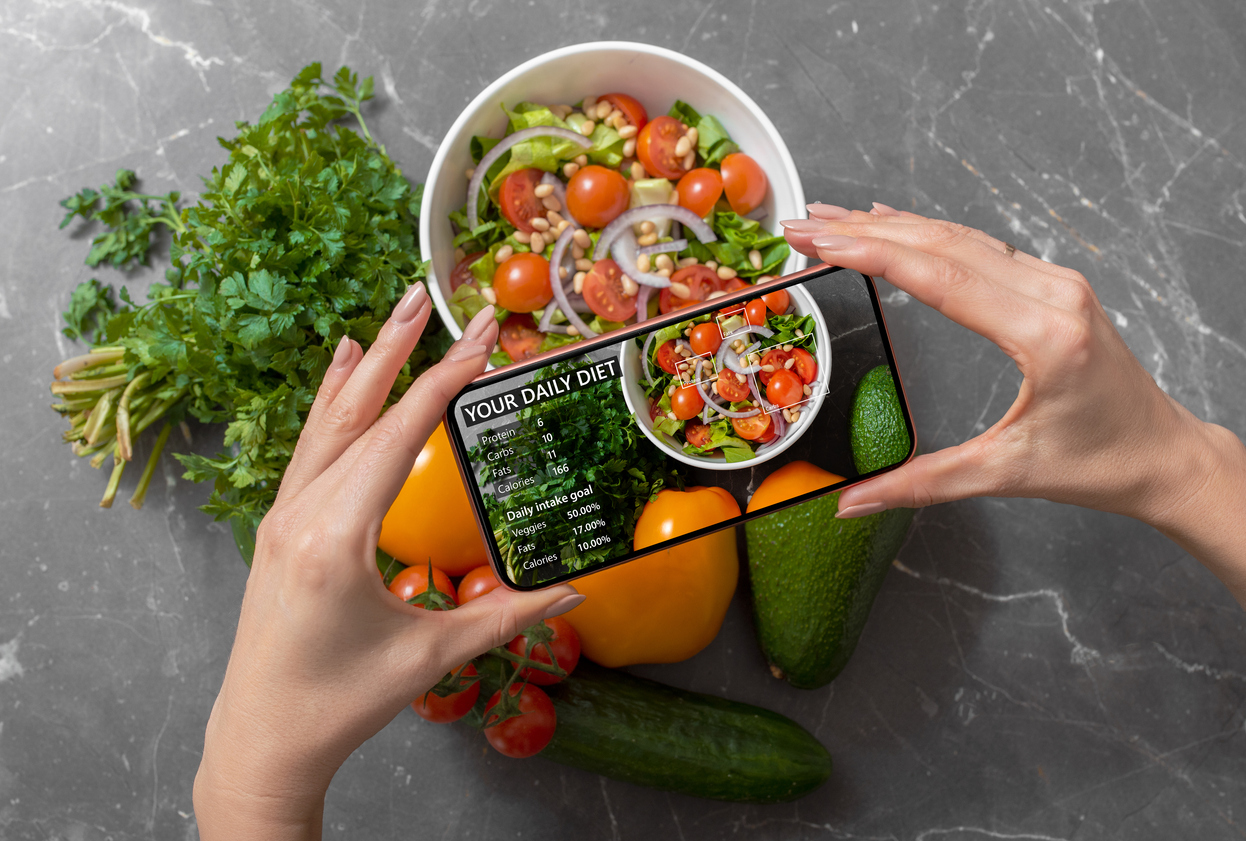
Artificial intelligence can generate a meal plan in seconds, explain a nutrient, summarise research and produce personalised-looking dietary recommendations at enormous scale.
That makes AI potentially transformative for nutrition communication.
But a fundamental question remains:
Can we trust what it tells us?
A 2026 study in The Journal of Nutrition compared diet plans and recommendations generated by ChatGPT with those developed by dietitians across three cardiometabolic scenarios: obesity with dyslipidaemia; obesity, dyslipidaemia and hypertension; and obesity, dyslipidaemia and type 2 diabetes.
The outputs were also assessed against official recommendations.
The study illustrates a broader point: AI can produce plausible and highly accessible nutrition advice, but plausibility is not the same thing as expert clinical judgement, contextual understanding or validated accuracy.
AI may be part of the problem—and part of the solution
The misinformation question becomes even more interesting when we look at another 2026 study.
Researchers developed the Diet-Nutrition Misinformation Risk Assessment Tool (Diet-MisRAT) to evaluate nutrition content across four dimensions: inaccuracy, incompleteness, deceptiveness and potential health harm.
Rather than treating misinformation as simply “true” or “false”, the framework produces graded levels of misinformation risk.
Importantly, the researchers investigated the role of both humans and generative AI in the assessment process, highlighting the possibility of human-in-the-loop AI as part of future nutrition-content oversight.
That gives us a more useful conversation than “AI is good” versus “AI is dangerous”.
What does this mean for nutrition communication?
AI can already help organisations accelerate literature searches, structure information, identify themes, draft content and adapt scientific material for different audiences.
But nutrition is particularly vulnerable to oversimplification.
Evidence evolves. Studies differ in quality. Associations can be presented as causation. Population-level recommendations may not apply to every individual. And technically accurate statements can still become misleading when important context is removed.
That makes source verification, scientific judgement and expert oversight critical.
For food businesses, professional associations and health organisations, AI governance may therefore become part of nutrition-communications governance.
The question should not simply be:
“Can AI create this content?”
It should also be:
“Who has checked the evidence, context and claims before this content reaches the public?”
The Nutricomms Perspective
At Nutricomms, we see AI as a potentially powerful addition to nutrition science and communication—but not a replacement for expertise.
Used well, AI can help professionals work faster, analyse information and communicate science more effectively. Used without sufficient oversight, the same speed and scale can amplify oversimplification, missing context and misinformation.
The future is therefore unlikely to be a choice between AI and nutrition experts. The more interesting model is AI + expertise: technology providing scale and efficiency, with qualified professionals providing scientific judgement, context and accountability.
In nutrition communication, trust will remain the differentiator.
Reference
- Katsigiannis G, Panoutsopoulos G, Perrea A, Detopoulou P. Comparison of ChatGPT and Dietitians in Formulating Diet Plans and Recommendations for Patients with Cardiometabolic Diseases. The Journal of Nutrition 156(8), 2026:101667; https://www.sciencedirect.com/science/article/abs/pii/S0022316626003160?via%3Dihub
- Ruani A, Reiss MJ, Kalea AZ. Development and validation of a tool for detecting misinformation risk in diet, nutrition, and health content (Diet-MisRAT). Scientific Reports 16, 9207 (2026). https://www.nature.com/articles/s41598-026-40534-2
